|
V. panoptes panoptes
Cape Crwaford, NT |
 |
V. panoptes rubidus
Wittenoom, WA |
 |
V. panoptes horni |
Varanus
panoptes with the subspecies is a member of the subgenera Varanus.
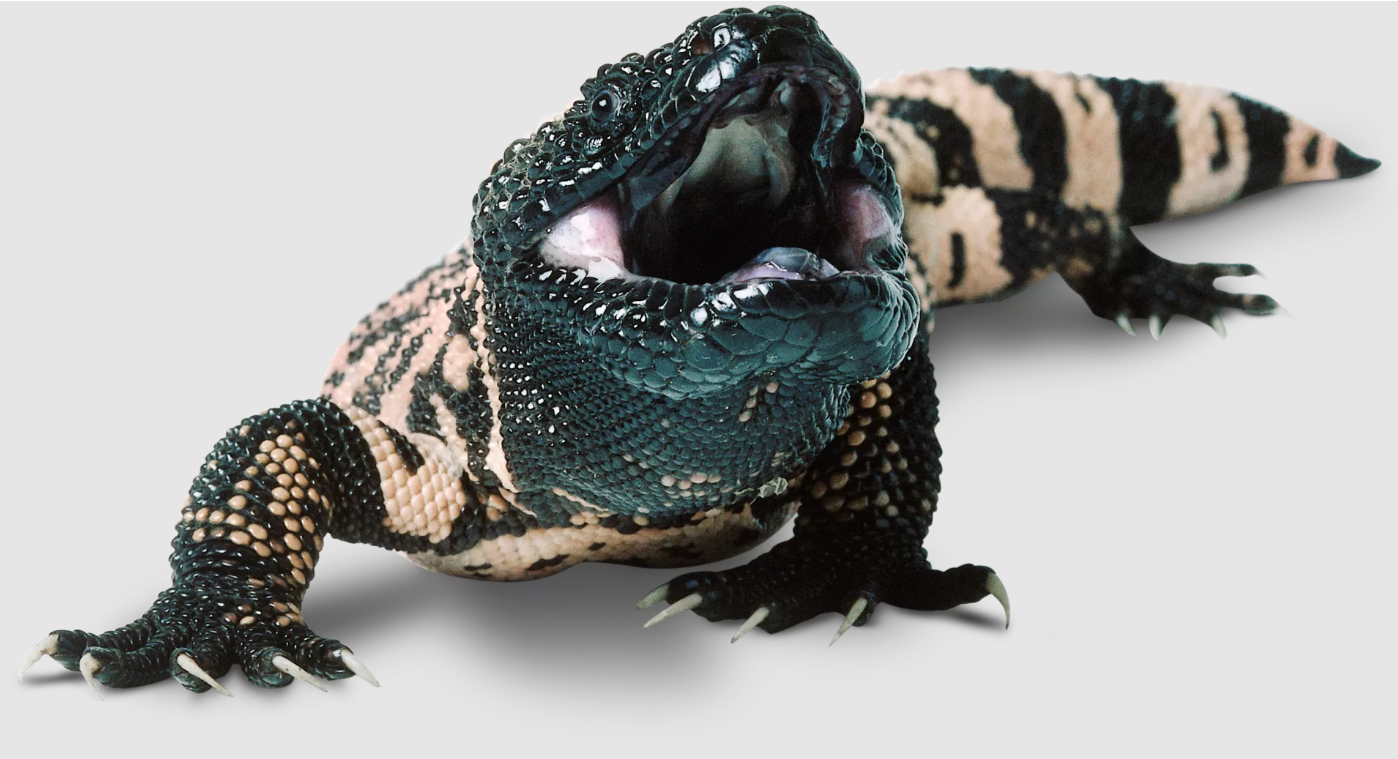
The main feature, which separates this species from V. gouldii is the existence of distinctive bright and dark round spots on the back,
forming crossbands. This pattern forms alternating bands on the tail, which
also is different to the tail pattern of V. gouldii. The subspecies V. p. rubidus has a monochromely yellow tip of the tail, similar
to V. gouldii.
All members grow quite large and can reach a total length of 160 cm. Females
of V. p. panoptes clearly remain smaller than males (SHINE 1986). Whether this also appears to the other subspecies is not described
yet.
|
Distribution,
habitat and behavior |

Varanus
p. panoptes occurs in the northern parts of Australia. The distribution
extends from the Kimberleys in the west across the Top End of the Northern
Territory up to the western part for Cape York Peninsula in the east (STORR 1980, STORR et.al. 1983b, WILSON & KNOWLES 1988, HOSER 1989, COGGER 1992, EHMANN 1992). IRWIN et
al. (1996) observed two animals which were foraging on the road during darkness
(7.30 pm). Both monitors seemed to be on search for food at that time.
The distribution of Varanus p. rubidus is restricted from the area
south of Broome across the Pilbara down to Kalbarri in Western Australia.
The most eastern distribution might be the Great Victorian Desert in the
center of the Western Australia (STORR 1980, STORR et.al. 1983b, COGGER 1992).
Varanus p. horni is found in the southern parts of New Guinea (BÖHME 1988b, 1991a).
On the Australian mainland V. p. panoptes and V. p. rubidus occur sympatric with V. gouldii (STORR 1980,
STORR et.al. 1983b, WILSON & KNOWLES 1988, HOSER 1989, COGGER 1992, EHMANN 1992).
|
Keeping
and breeding |
As
mentioned at the captive husbandry in V. gouldii, these animals
need a fairly large enclosure. You also can integrate a water basin into
the enclosure. Sometimes these animals are lying in the water for a while.
An infection with skin funghi, as reported in V. gouldii is not
known till now. That means, that V. panoptes can tolerate a more
humid habitat than V. gouldii.
You can keep one pair together on one enclosure, but you must have an eye
on any aggressive activity, especially during feeding. Also the males can
become very aggressive during the mating period. It might be recommended
to separate the animals and only put them together for a short while during
the breeding period.
As food we offer them everything with which they can overpower, from locusts
to cockroaches, mice up to little rats.
The captive breeding of V. p. panoptes and V. p. horni is reported last years repeatedly. HANINGER-BERLIN (1993) admits detailed information of the initializing factors for the successful
breeding. He separates the sexes almost the whole year. A hybernation like
phase more than three months at 16-18°C promotes the sexual synchronization
of the animals. 14 days after the hibernation the animals were put together
and it came to spontaneous matings. The eggs were laid about 5 weeks after
these matings. The eggs were incubated at temperatures between 26 and 28,5°C
in damp vermiculite and the babies hatched after 210-293 days. The youngsters
measured after hatching approx. 30 cm in total length and weighed about
27 g. |