Varanus

Varanus komodoensis OUWENS 1912
Komodo Dragon


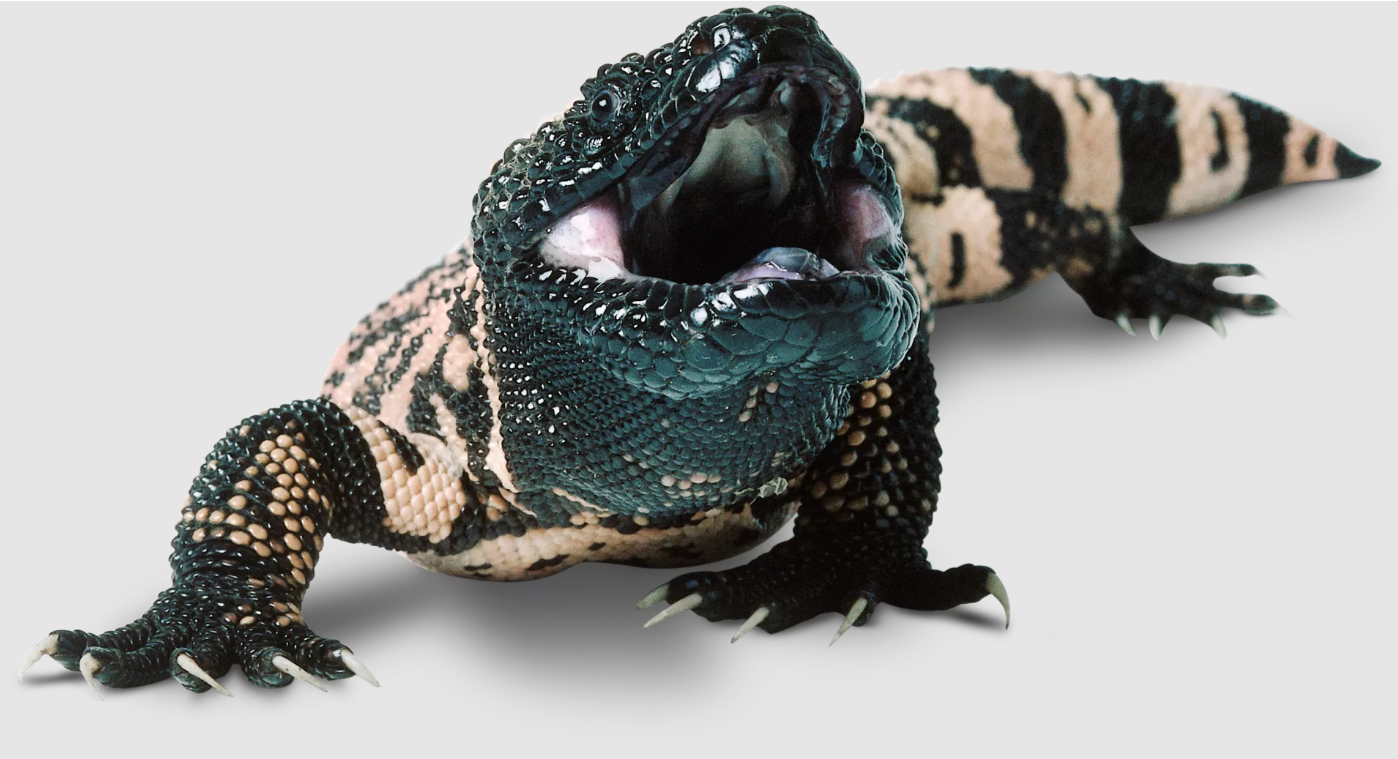
komodoensisVaranus komodoensis is the largest today living member of the monitors. It is a member of the subgenera Varanus. Although it is not just inconspicuous with a length of over 3 m and a weight of up to 150 kg this species became first known to science in 1912 by the Dutchman OUWENS.
The biology of V. komodoensis was investigated by AUFFENBERG (1981a), who lived several years on the island of Komodo and maintained a research station there.
As food everything which can be overpowered by this monitor is accepted. The pigs and red deers living on these islands are domestic animals of the people there are also part of the food spectrum. Occasional attacks on people were already reported. The most well-known sacrifice was Baron Rudolf von Reding Biberegg. He disappeared during an excursion on Komodo Island in July 1974. The only remainses which were found were his hat, the camera and a bloody shoe.
The dragons of Komodo generally confine themselves to the consumption of sick and weak or fresh born animals. However, they also eat occasionally thermometer chickens (LINCOLN 1974). At the hunting of bigger animals, like red deers and water buffalo, they lie in wait for these at the deer paths and then bite in a surprise attack into the legs. Because there are lots of infective bacteria in the saliva of the monitors, which were indroduced into the wound during the bite, the monitors do not have to kill their prey immediately - water buffalos are very powerful - so they can follow the tracks of the wounded prey over several days, till it died on loss of blood or are weak by an infection. After that it is much easier to overpower the animal. V. komodoensis also feeds on carrion.
DIAMOND (1987) mentioned, that V. komodoensis has an impact on the extiction of Pygmy Elephants, which were living on these islands.


Distribution, habitat and behavior

komodoensis

The distribution of the largest monitor species is restricted to a very small area. V. komodoensis occures on the islands of Komodo, Rintja, Gillimontang, Pandar and the western coast for Flores (MERTENS 1942d, AUFFENBERG 1980, 1981a). It is already presumably extinct on Pandar since the red deers, their major food source, are poached very strongly there.
The habitat of the dragons is the grassland on the islands, where they sit and wait for food at deer paths, or walk around to search for food. To give tourists the possibility to observe the monitors, a feeding place was built in a creek bed, where dead goats were offered, which could be bought by the tourists from the people of the island. Komodo Dragons have an excellent sense of smell, several animals assemble in this food place after a short time to feed on the carrion, as all other monitors do. The danger consists now, that the monitors get used to the humans therefore they are no longer afraid and the situations sometimes have already become very dangerous since the tourists lost any fear on hunting for good pictures. That was the reason, why this feeding spot now was abandoned.


Keeping and breeding

Because of the size of adult V. komodoensis, it is recommended, that these animals should be kept only in zoos or reptile parks, where enough room could be supplied. In Indonesia and also in the several zoos, especially in the USA, these impressive giants have already been kept and sometimes also bred (WALSH & ROSSCOE 1993, WALSH et al. 1993). In the zoos of Indonesia V. komodoensis can be kept and bred under natural conditions without greater problems (BUSONO 1974).
Three animals of these monitor species are kept also at the Berlin Zoo since some time (LANGE 1989, 1991). The animals live in an enclosure which measures 12.6 x 2.7 x 6.5 m LBH. The floor is build of concrete, which is spread with epoxy resin. Some robust tree-trunks and some big rocks serve the animals as cover and sleeping opportunity. A great basin in the middle of the enclosure is used by the monitors for bathing.
A first breeding success of Varanus komodoensis in captivity is published from Indonesia (BUSONO 1974). The animals could be housed under natural conditions. Unfortunately, only few details are published. 29 young animals hatched less than 2 months of incubation. These details might be a mistake of the author, because the zoo incubated various clutches of eggs presumably. However, in the last few years several breeding successe happened at the National Zoo in Washington (WALSH & ROSSCOE 1993, WALSH et al. 1993). Till now 55 young animals hatched out of several clutches after an incubation period of 237-280 days. The incubation temperatures were between 27.5 and 29°C in vermiculite. The youngsters had a total length between 380 and 420 mm. They weighted between 71.7 and 103 g. The rearing did not cause any problems.

   
back