| |
 Varanus beccarii was known as a subspecies of V. prasinus and is therefore a member of the subgenera Euprepiosaurus.
In his review in 1991b SPRACKLAND mentioned, that V. beccarii has to be raised into species-rank, because of the big differences in morphology to V. prasinus. ZIEGLER & BÖHME (1997b) found out, that the differences between V. prasinus and V. beccarii are not big enough to keep the species status, so they put V. beccarii again into subspecies of V. prasinus. Again ZIEGLER et al. (2007) showed in their study, that V. beccarii should be a species again, because of the differences in the DNA.
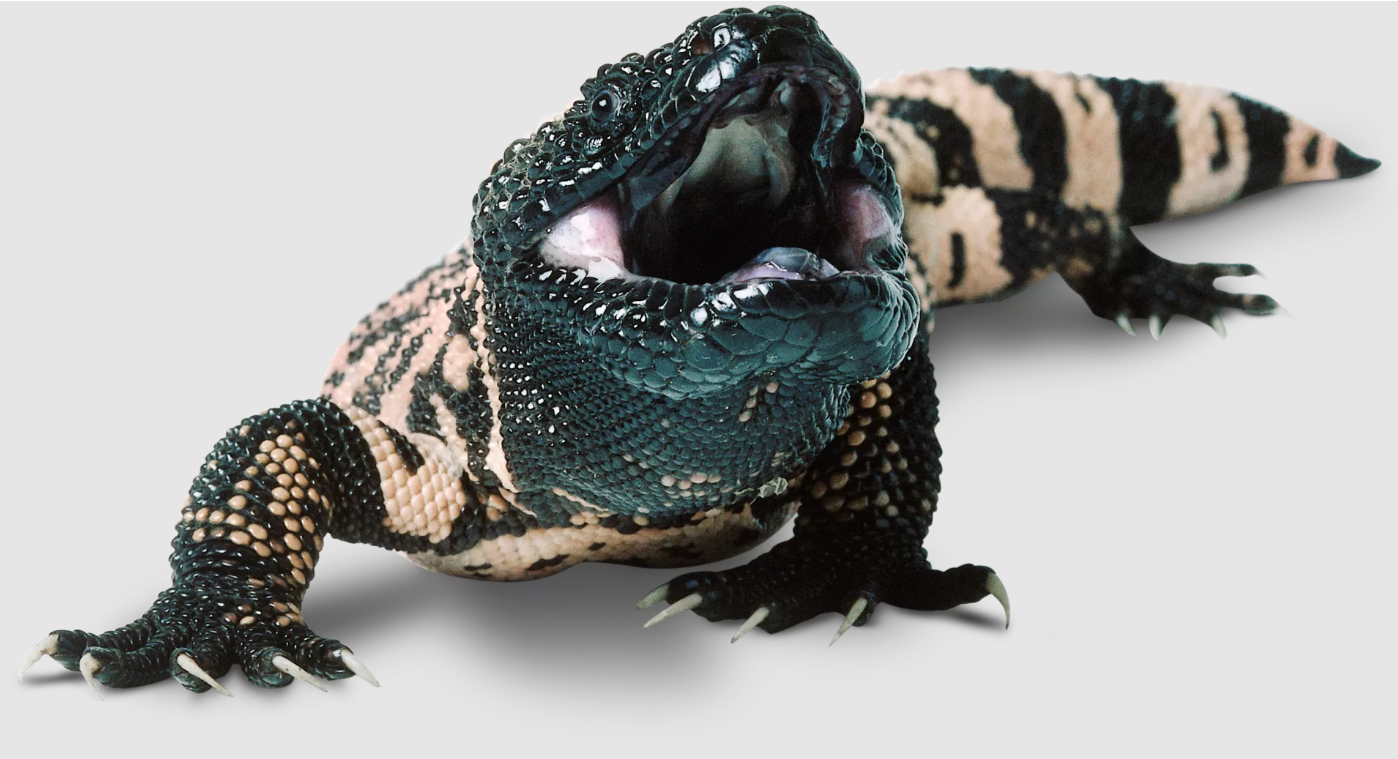
V. beccarii can grow up to 95 cm in total. The coloration is
pitch black, with a light gray on the belly. The head scales are smooth and are bigger and keeled on the neck.
The nostril is situated in the middle between tip of snout and front edge of eye. 81-86 scale rows are around mid-body. The belly scales are keeled. The tail is about 1,7-2,3 times as long as SVL, and is round in cross section.
|
Distribution,
habitat and behavior |

The distribution of V. beccarii is restricted to the Aru Islands
southwest of New Guinea. It is also a tree climber and it feeds on every
kind of insect especillay on catydits. Occasionally they also eat little
birds, which they take out of nests during the brief surveys through the
canopy (MERTENS 1941, CZECHURA 1980, GREENE 1986, LOSOS & GREENE 1988, SPRACKLAND 1989a,
1991a, 1992b, 1994a).
|
Keeping
and breeding |
Members of the V. prasinus complex should be housed in an enclosure for tree climbers. The animals originate from tropical rainforrest, so it is recommended to offer them a fairly high humidity.
Hhousing one pair, it was good to organize the enclosure so, that you will have the opportunity to separate the animals. This separation is also good, because you can feed the animals under control.
Mating can be induced by increasing the humidity. In some occasions the animals mated while hanging on the side wall. Such a mating can last for 30 - 45 min.
To give the femal the chance to drop the eggs into the offered nesting box, you can separate her from the female. The box is filled with damp bark chips, and a heating pad is positioned on one sied of the box, to imitate a thermal gradient. The eggs measure 60 mm in length and about 20 mm in diameter. incubation was in damp perlite at temperatures between 27 and 29°C. The babies hatched after 170 days
(EIDENMÜLLER & WICKER 1992, SPRACKLAND 1989a, 1992a, BIEBL 1994b, EIDENMÜLLER 1996).
The raising of the babies was fairly easy. we offered them small crickets, grass hopper, and cockroaches, which were always dusted with a vitamin/mineral supplement. |