Diet

Almost all monitors are carnivorous, which means they eat meat. However some specific examples of non meat eating monitors are Varanus olivacaeus and the newly described V. mabitang, which both live on different Philippine Islands and prefer to eat fruit and leaves (AUFFENBERG 1988, GAULKE & CURIO 2001).
V. pilbarensisV. gilleniInsects, spiders, crayfish, fish, amphibians, reptiles, eggs, birds and mammals are the major part of the standard diet of most monitors. Prey size and type generally depends on the size of the monitor. In the wild monitors, particularly V. niloticus, V. gouldii, and V. panoptes are known to find clutches of eggs of other monitor species or crocodiles (BAYLESS 1992c, LENZ 1995). Monitors in general do not appear to be particularly selective in food items. Occassionally they are even canibalistic. Since size between species vary considerably, the food spectrum is very variable too. In the wild members of the smaller species mainly feed on insects and smaller reptiles, which they can overpower. V. komodoensis from Komodo Island not only feed on pigs, which occur on this island, but also takes red deer and wild domestic animals. Humans have also become the victim of the Komodo monitor. Examination of numerous stomach samples of free living monitors has revealed the preferential food items taken by some species of monitor (JAMES et al. 1992, LOSOS & GREENE 1988, PIANKA 1968, 1969a, b, 1970a, b, c, 1982, SHINE 1986, SPRACKLAND 1993b, ZIEGLER & BÖHME 1996, GAULKE & CURIO 2001).
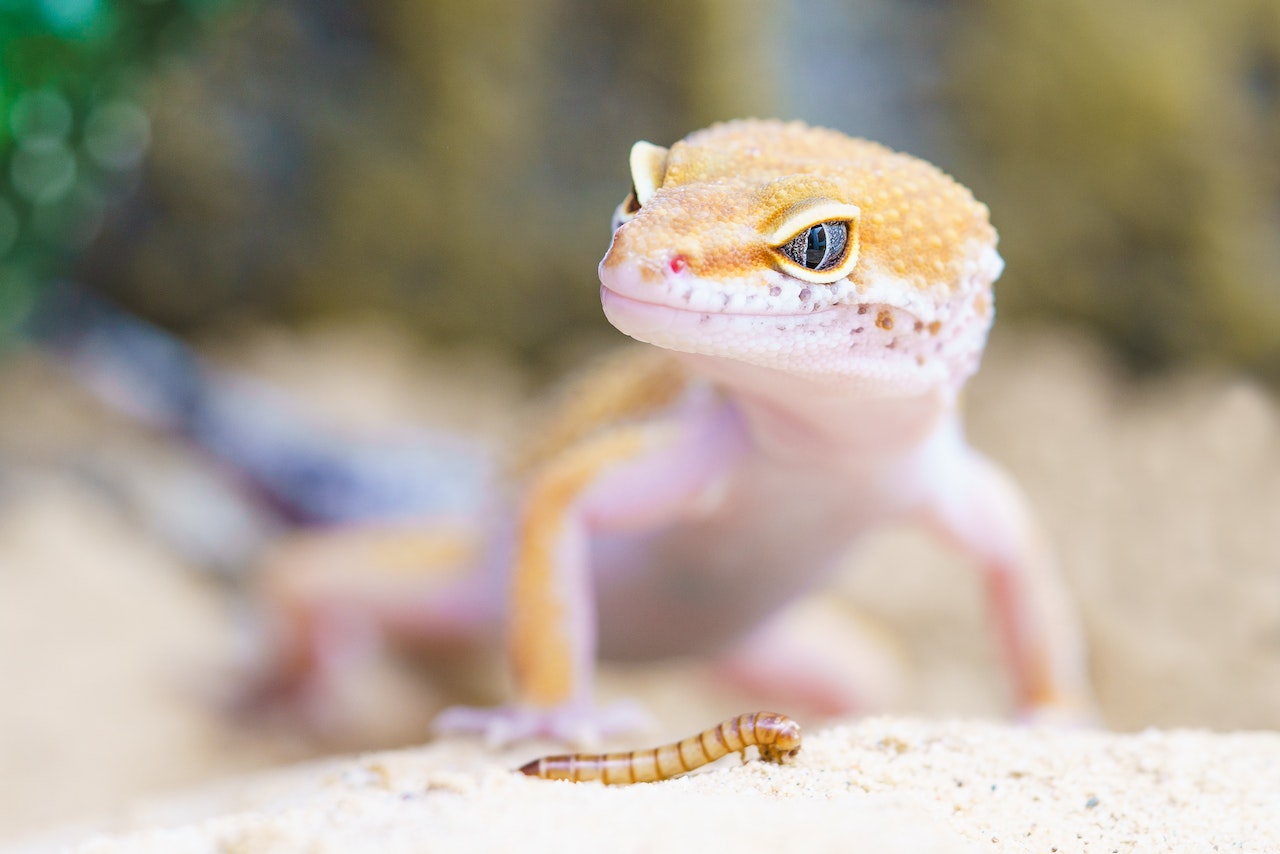
It is not possible to offer this variety of food to captive monitors. So instead we use food items for smaller species such as crickets, house crickets, grass hoppers, locusts, cockroaches and larvae of the Giant Mealworm. New born mice (thawed or recently euthanased) are occasionally offered to enlarge the menu. As the food contains a balanced mixture of vitamins, minerals and fibre in the wild, it is absolutely necessary to provide these nutrients as closely as possible for captive monitors. So it is good to dust all insects with a vitamin mineral mixture such as Nekton MSA® or Korvimin ZVT®. Do not offer too much food, especially crickets and cockroaches as they tend to hide within the decorations of the cage and monitors can no longer reach them. Night active insects may also represent a physical risk to the sleeping monitor.
To date there is no report of crickets attacking healthy monitors, but there is evidence to suggest that dead monitors have been consumed by these crickets within a cage. So there is a risk and it may be especially prevalent for young offspring.
Bigger monitors eat bigger food items so it is just not practical to feed something the size of a V. mertensi on crickets and locusts unless you have a very healthy budget. Mice and occasionally rats and chicks are much better food because the food item per unit is cheap and the protein in each food item is extensive so few items are needed. Feeding chicks can cause a minor problem, because it tends to produce a monitor excrement that is very thin and smells unpleasant. If you do feed the monitor chick you will find it necessary to clean the enclosure immediately for hygienic reasons.

back